hosting for AI academy
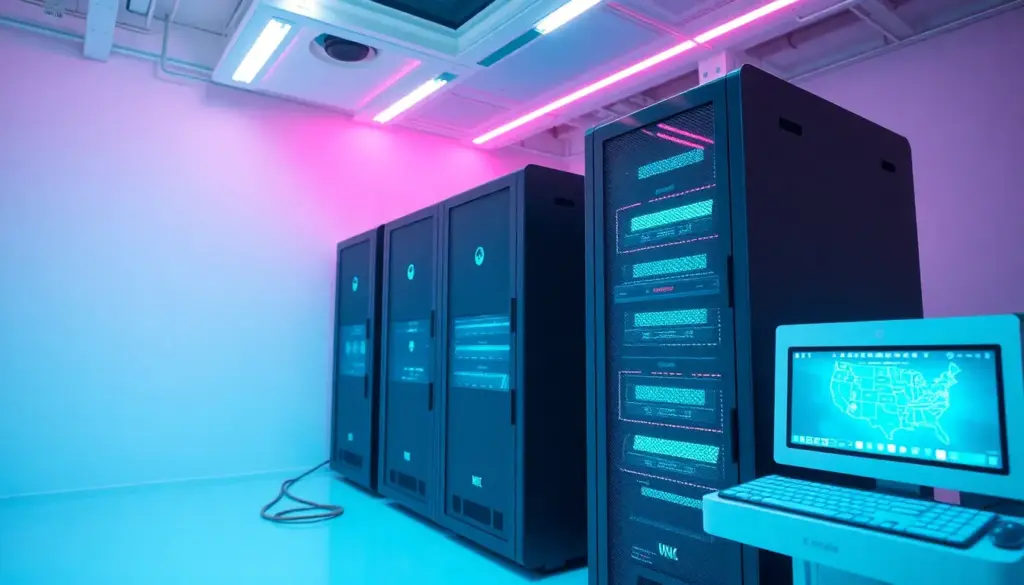
Quick Answer: In 2026, hosting an AI academy requires a specialized infrastructure built for intense computational workloads, massive data throughput, and dynamic scalability. Forget traditional web hosting. You need a platform with dedicated GPU/TPU instances, high-performance NVMe storage clusters, and intelligent orchestration that can spin resources up or down based on real-time training sessions and student lab demands. Security must be zero-trust, and global low-latency is non-negotiable for interactive coding and model deployment. It’s not just about servers; it’s about providing a seamless, powerful, and secure computational classroom.
The 2026 AI Academy: Why Your Hosting Platform is the Most Critical Course in the Curriculum
It’s 2026, and the landscape of education has been fundamentally reshaped. AI academies aren’t just trendy bootcamps; they are the primary pipelines for the next generation of engineers, researchers, and ethicists. These institutions deliver courses on live model training, real-time inference projects, and collaborative hackathons with datasets measured in petabytes. The traditional learning management system (LMS) is now a computational management system. And at the heart of this revolution lies a single, make-or-break decision: your hosting infrastructure. Choosing generic cloud hosting for an AI academy in 2026 is like trying to power a fusion reactor with a AA battery. The demands are that specific, and the stakes are that high.
At HostVola, we’ve spent the last few years deep in the trenches with pioneering AI academies. We’ve seen what works, what catastrophically fails, and what’s necessary to build a future-proof learning environment. This isn’t merely about uptime; it’s about providing raw, orchestrated, and intelligent computational power that feels like an extension of the instructor’s teaching toolset. The hosting platform itself becomes the foundational lab, the library, and the collaborative studio all at once.
Beyond Virtual Machines: The Compute Fabric of Learning
The core commodity of an AI academy is compute cycles, specifically accelerated compute. In 2026, CPU-only instances are relegated to serving the static brochure website. The actual learning happens on a dynamic compute fabric.
Imagine a scenario: Dr. Anya Sharma is teaching an advanced module on Diffusion Models. With a click in her academy’s portal, she provisions 32 dedicated GPU instances, pre-configured with the week’s specific software stack, and assigns them to her cohort of 50 students for a 4-hour lab session. Some students are running intensive training jobs, others are fine-tuning pre-built models, all on isolated, high-performance slices of the same cluster. After the lab, those instances automatically wind down, saving massive costs. This on-demand, high-density GPU/TPU provisioning is non-negotiable. Hosting must offer not just access to these resources, but an intuitive layer of orchestration that allows educators to manage them as easily as they would a Zoom link.
The Data Spine: When NVMe Storage Becomes a Pedagogical Tool
AI in 2026 is hungry for data. An academy’s hosting needs a data spine—a high-throughput, low-latency storage layer that connects every computational resource. Student projects involve streaming real-world sensor data, querying massive curated datasets like refined versions of 2020’s LAION, or collaborating on a single, massive model checkpoint.
Standard block storage causes bottlenecks that kill momentum. The solution is a globally distributed storage cluster using the latest NVMe protocols, offering both blazing speed and inherent redundancy. This allows a student in Singapore to pull a multi-terabyte dataset as fast as a student in London, with no lag in their interactive coding environment. Furthermore, this storage layer must integrate with data versioning tools (like DVC in 2026) and provide seamless snapshots for project rollbacks. A student’s catastrophic error during a training run should be a learning moment, not a data recovery disaster.
Security in a Zero-Trust Academy: Guarding the Intellectual Property Factory
An AI academy is a high-value target. It houses proprietary training pipelines, novel model architectures from student research, and valuable datasets. A 2024-style firewall-and-password security model is laughably inadequate. Hosting for an AI academy must be architected from the ground up on a zero-trust framework.
Every user, every container, every API call must be authenticated, authorized, and encrypted. Network micro-segmentation ensures that a student’s compromised lab instance cannot pivot to access another student’s research project or the academy’s core model repository. All data, both at rest and in transit, must be encrypted with quantum-resistant algorithms, a standard practice by 2026. Compliance isn’t just about GDPR; it’s about adhering to the new AI Development Ethics Frameworks that mandate rigorous data provenance and access logging. The hosting provider must deliver transparent, immutable audit trails for every action taken on the infrastructure.
The Latency Imperative: The “Live Code” Classroom Experience
Gone are the days of students passively watching video lectures. The modern AI academy is interactive and live. Students code in browser-based notebooks that are executing code on remote GPU instances. They tweak hyperparameters in a real-time dashboard and see the impact on a training model’s loss curve instantly. They collaborate on a shared inference endpoint.
If there is latency or jitter in this connection, the learning experience shatters. Attention is lost, frustration builds. Therefore, hosting must be globally distributed with edge computing nodes. A student in São Paulo should feel like their compute instance is next door, not in a distant central US region. This requires a intelligent traffic routing mesh and content delivery networks (CDNs) evolved to handle not just static assets, but dynamic, compute-heavy sessions. The performance of the academy’s platform is directly correlated to student engagement and success rates.
Orchestration & Automation: The Silent Teaching Assistant
The true magic of a tailored hosting platform is the automation layer that handles the grunt work. This is your silent, ever-present teaching assistant.
- Autoscaling for On-Demand Labs: Infrastructure that scales out precisely for scheduled lab times and scales in during off-hours, optimizing cost-efficiency dramatically.
- Pre-Baked, Version-Controlled Environments: One-click deployment of course-specific environments with exact library versions, eliminating the “but it worked on my machine” syndrome that plagues AI development.
- Resource Governance and Quotas: Fair and transparent systems that give students freedom within limits (e.g., 100 GPU-hours per module), teaching resource management alongside AI ethics.
This orchestration, often managed through Kubernetes clusters tailored for AI workloads, is what transforms a chaotic pile of servers into a cohesive, manageable educational platform.
Future-Proofing for the Next AI Wave: Hosting as a Strategic Partner
Choosing a hosting partner in 2026 is a strategic curriculum decision. The field of AI moves at a breathtaking pace. The hosting platform must be agile enough to support emerging hardware (think optical or neuromorphic co-processors) and new software paradigms.
At HostVola, we don’t just provide infrastructure; we provide a roadmap. Our dedicated engineering teams work with academy CTOs to plan for the next wave. Will your academy need to support large-scale swarm learning projects in 2027? Are you planning to offer quantum machine learning modules? The underlying hosting architecture must be flexible and forward-looking. It must be a partner in innovation, not a static utility.
The AI academy of 2026 is a powerhouse of innovation and talent development. Its hosting environment is the stage upon which this entire drama unfolds. It must be powerful, intelligent, secure, and invisible—allowing educators to teach and students to build, without ever being hindered by the limitations of their tools. This is the mission we’ve built HostVola to serve. Because in the end, the success of your students’ first large language model or revolutionary computer vision application might just depend on the quality of the foundation you built it on.
Frequently Asked Questions (FAQs)
1. Can’t we just use a major public cloud provider with educational credits?
While the large public clouds offer the raw components, they are generalist platforms. Managing a secure, cost-effective, and pedagogically-sound environment on them requires significant in-house DevOps expertise, which distracts from your core mission: education. A specialized provider like HostVola delivers a pre-integrated, education-optimized stack with automation, security, and support tailored specifically for the dynamic, project-based workflow of an AI academy, often at a more predictable and lower total cost.
2. How do you handle the “bursty” nature of academic workloads—empty at 3 AM, slammed at 2 PM?
This is where our intelligent orchestration layer shines. Our platform uses predictive scaling based on your academy’s published schedule and real-time monitoring of demand. Resources are automatically provisioned minutes before a scheduled lab begins and decommissioned after a grace period. For unscheduled, ad-hoc student project work, we use a spot-instance-like queue system that provides access to available capacity at lower priority, ensuring no student is ever completely blocked while maximizing infrastructure utilization and cost savings.
3. Our students are working on sensitive, proprietary research. How is their IP protected?
Protection of intellectual property is our top security priority. We enforce a strict zero-trust network model where all student and research environments are logically isolated. All data is encrypted end-to-end. Students and researchers only have access to their specific project environments. Furthermore, we offer optional “air-gapped” dedicated hardware clusters for the most sensitive projects, with no external network connectivity. Our contracts clearly state that you own 100% of the data and models produced on our platform; we are merely the custodian of the infrastructure.
HostVola 2026: Built for Speed
Scale your business with the most reliable Indian hosting of 2026.