best web hosting for print on demand
Quick Answer for 2026
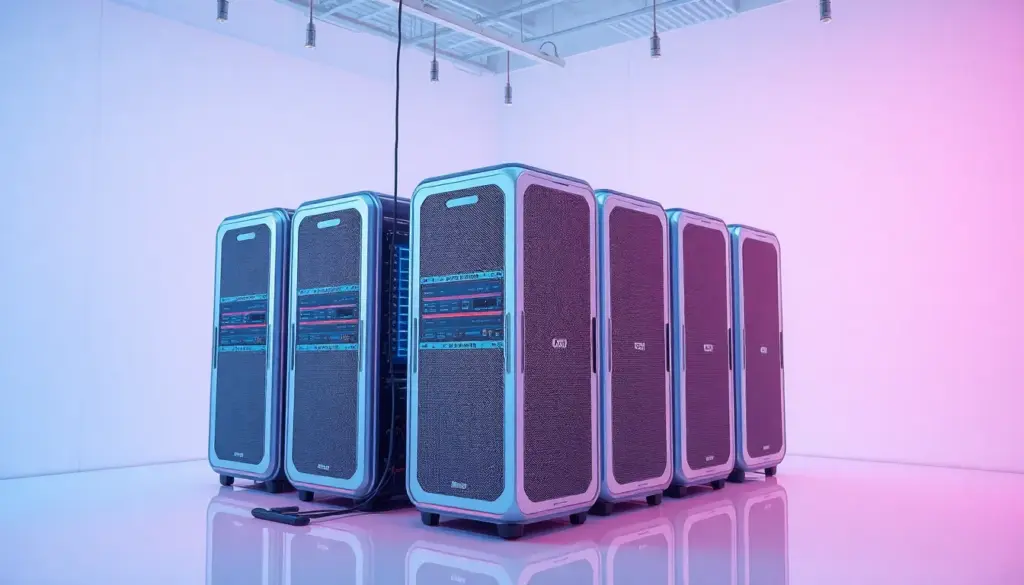
In 2026, the best web hosting for a print-on-demand (POD) business isn’t just about uptime and storage. It’s about AI-integrated scalability, real-time global CDN performance, and seamless API connectivity with platforms like Shopify, Etsy ProStore, and next-gen POD services. For most POD entrepreneurs, a managed cloud VPS with built-in edge computing offers the perfect balance of power, automation, and cost. HostVola’s AI-Optimized Cloud plans lead the pack by auto-scaling resources during traffic surges from viral product launches and dynamically caching product images worldwide, ensuring your store never misses a sale.
The 2026 Print-on-Demand Landscape: Why Your Hosting Choice is Everything
Let’s be real. The print-on-demand game in 2026 is a different beast. We’re past the simple days of slapping a design on a mug and calling it a day. Now, it’s about hyper-personalized AI-generated designs, AR product previews, instant global fulfillment, and selling across a dozen integrated channels simultaneously. Your website isn’t just a storefront; it’s the mission control center for a distributed manufacturing and sales operation. If your hosting is slow, insecure, or can’t handle a sudden TikTok-driven demand spike for your new line of bio-luminescent hoodies, your business flatlines. The foundation of this entire, fast-moving enterprise is your web host. Choose wrong, and you’re building on sand.
The Non-Negotiable Hosting Features for POD in 2026
Forget the basic feature lists from five years ago. Here’s what actually matters for your print-on-demand business now:
1. AI-Powered, Predictive Auto-Scaling
Your traffic will be spiky and unpredictable. A feature on a virtual influencer’s stream can send 100,000 visitors to a single product page in an hour. Your hosting must detect this surge before your site slows down and automatically allocate more CPU, RAM, and database resources. Manual scaling is a relic of the past. Look for hosts that offer true predictive scaling based on traffic patterns and integration with your ad platforms.
2. Global Edge Caching for Media Assets
High-resolution 3D product spins and AR try-on videos are massive files. If they’re loading from a single server in Dallas for a customer in Sydney, you’ve lost the sale. Your host needs a Content Delivery Network (CDN) that’s not an add-on, but baked into the infrastructure. In 2026, the best hosts cache your dynamic product images and media at the network edge, ensuring sub-second load times globally, which directly translates to higher conversion rates.
3. Unbreakable API Uptime & Database Performance
Your site is constantly talking: syncing inventory with Printful, Gelato, or the latest AI-fulfillment platform; pulling orders from your Shopify backend; updating tracking via Etsy. This happens through APIs. If your server’s database can’t handle hundreds of simultaneous API calls efficiently, orders will fail, and inventory will desync. Look for hosting with optimized database engines (like Redis or LiteSpeed) and guaranteed API endpoint uptime.
4. Built-in Security for a Multi-Channel Business
With more connections come more vulnerabilities. A POD site in 2026 is a prime target for cart fraud and data scraping. Your host must provide automated, AI-driven security that includes real-time threat blocking, malware scanning specific to e-commerce platforms, and SSL certificates that are managed automatically. Compliance with evolving global data laws is also a must.
Top Web Hosting Types for Print-on-Demand: A 2026 Breakdown
Managed Cloud VPS: The Sweet Spot for Scaling POD Stores
For the vast majority of serious POD entrepreneurs, a Managed Cloud VPS (Virtual Private Server) is the undisputed champion. It gives you the dedicated resources of a server without the nightmare of managing it. Providers like HostVola handle security patches, server optimizations, and backups, while you get root access to fine-tune your e-commerce environment. The cloud aspect means infinite scalability; you’re not limited to one physical machine. This is perfect for handling seasonal POD rushes (think custom holiday apparel) or viral product moments.
Advanced WooCommerce Hosting: For the WordPress Power Users
If your entire workflow is built on WordPress with WooCommerce and a suite of specific plugins for POD (like WooFunnels for upselling or Product Personalizer for customizations), then an advanced, WooCommerce-optimized hosting plan is key. These aren’t your generic shared hosting plans. They feature servers pre-configured for WooCommerce, with object caching for product databases, staging environments specifically for testing new product integrations, and one-click tools for managing the myriad of plugins a modern POD store requires. The integration is seamless and performance-tuned.
Dedicated Server Clusters: For Enterprise-Level POD Brands
When your print-on-demand brand is processing thousands of orders daily, has a massive, ever-changing product catalog, and runs complex backend logistics software, you need the raw power and isolation of a dedicated server or even a private cluster. This is for the top 1% of POD businesses. You have full control over every aspect of the hardware and software stack. This option requires a dedicated sysadmin team or a premium managed service, but it delivers the ultimate in performance, security, and customization for a high-volume global operation.
Why HostVola’s AI-Optimized Cloud is Engineered for Modern POD
At HostVola, we built our 2026 infrastructure with businesses like yours in mind. Our AI-Optimized Cloud isn’t just marketing speak. Here’s how it directly powers your print-on-demand success:
Smart Resource Allocation: Our system learns your store’s traffic patterns. It knows you get more sales on weekends and prepares resources in advance. It ties into platforms like TikTok Shop and can scale proactively if it detects a potential viral product link gaining traction.
Edge-Integrated Product Delivery: Every product image, video, and 3D model is automatically distributed across our global edge network. When a customer in Berlin views your new t-shirt design, it loads from Frankfurt, not Virginia. This slashes load times and keeps bounce rates low.
One-Click POD Stack Integration: Our control panel features one-click installs and optimizations for the entire POD software stack: WooCommerce + specific POD plugins, Magento with integrated fulfillment APIs, and headless commerce setups. We pre-configure the caching and security rules for these applications, so they run at peak performance from day one.
Automated Compliance & Security: We handle the technical side of GDPR, CCPA, and other regional data laws for your hosting environment. Our AI security layer is trained to recognize and block e-commerce-specific attacks like carding bots and inventory scraping scripts before they can impact your store’s operations.
Making the Final Decision: Your 2026 Hosting Checklist
Before you choose your print-on-demand hosting partner, run them through this list:
- ✅ Does it offer true, predictive auto-scaling (not just manual resource upgrades)?
- ✅ Is a global CDN with edge caching included in the core plan, not a paid extra?
- ✅ Are there pre-built configurations or optimizations for my chosen platform (Shopify, WooCommerce, BigCommerce)?
- ✅ What is the historical uptime for API endpoints and database connectivity? (Aim for 99.99%+)
- ✅ Does the security suite include automated malware cleanup and e-commerce fraud mitigation?
- ✅ Is there 24/7 support with experts who understand e-commerce and API integrations?
Your hosting is the silent partner in your print-on-demand business. In the hyper-competitive, fast-paced world of 2026, partnering with a host that understands the unique demands of POD isn’t a luxury—it’s the core requirement for sustainable growth. Invest in a foundation that scales, secures, and speeds up your vision.
Frequently Asked Questions (2026 Edition)
Q1: Can’t I just use a generic shared hosting plan for my POD store to save money?
A: In 2026, this is an extremely high-risk move. Generic shared hosting places hundreds of sites on a single server with limited resources. A traffic surge to any one of those sites—or a security breach—can take yours down too. The lack of auto-scaling, advanced caching, and optimized databases will lead to slow load times during crucial sales periods and likely cause API sync failures with your print providers, resulting in missed or lost orders. The few dollars saved per month are not worth the potential lost revenue and reputation damage.
Q2: How important is server location for a global POD business in 2026?
A: The physical location of your main server is far less important than it was five years ago, provided your host has a robust global edge network. With a proper CDN, your static and dynamic content is served from locations close to your customer. However, your primary server’s location can still affect backend operations (like admin panel speed and order processing). Choosing a host with data centers in a geographically central or reliable region (like North America or Western Europe) is wise, but the quality of their edge network is the critical factor for customer-facing performance.
Q3: My POD sales are seasonal. Will I be overpaying for hosting during my off-season?
A: Not with a modern, cloud-based solution. This is where the 2026 advantage of true cloud hosting shines. With providers like HostVola, you only pay for the resources you use. During your quiet months, your costs will automatically scale down as your resource consumption decreases. During your peak season (e.g., Q4 holidays), the system scales up to handle the load, and your costs scale proportionally. You’re never paying for idle maximum capacity, making it the most cost-effective model for a business with fluctuating demand.
HostVola 2026: Built for Speed
Scale your business with the most reliable Indian hosting of 2026.